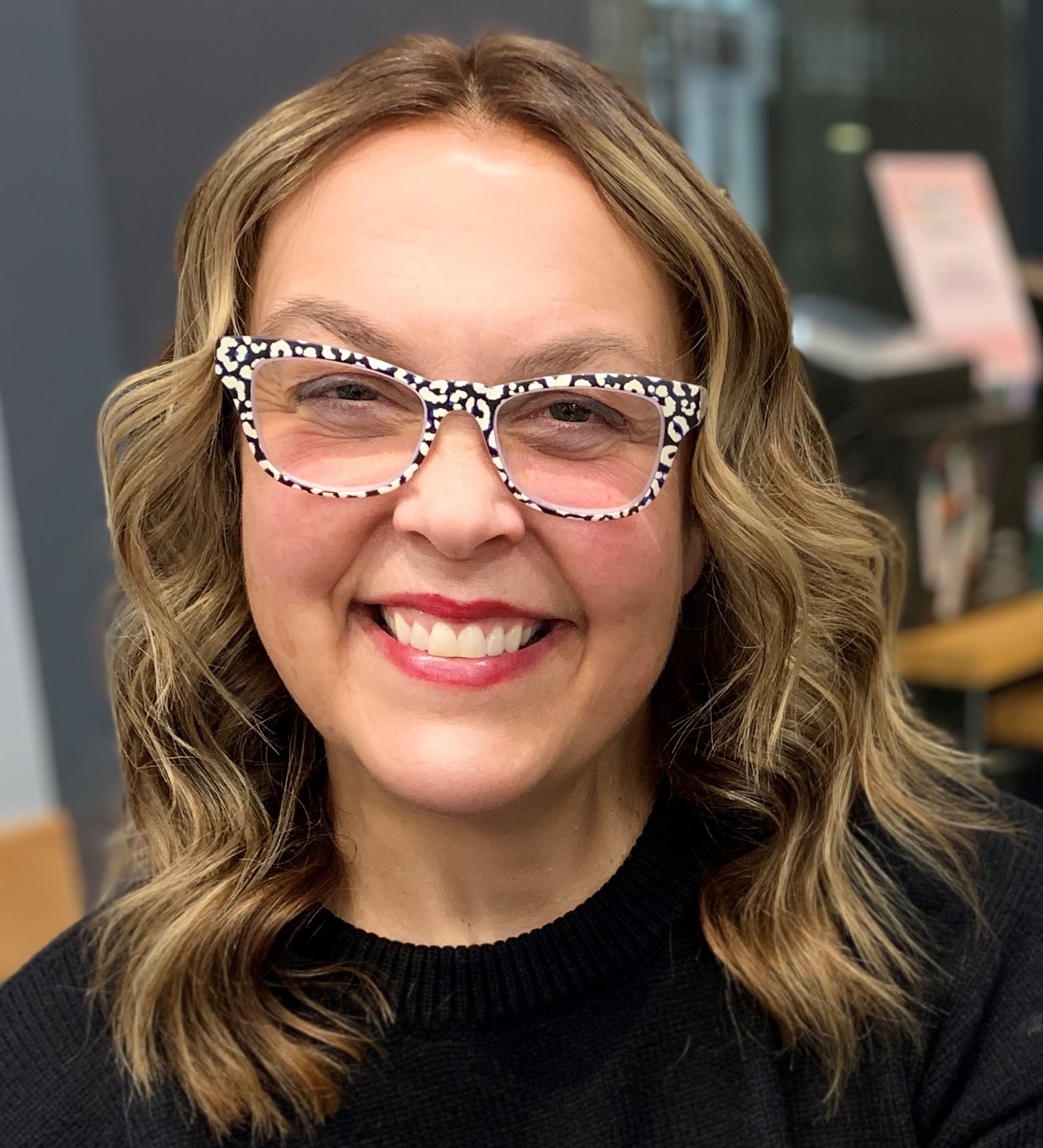
Professor Cheryl Stucky is the Marvin Wagner Endowed Chair and Director of the Pain Division of the Neuroscience Research Center at the Medical College of Wisconsin. Together with her team, Stucky studies the molecular, cellular, and physiological mechanisms of sensation, particularly regarding how we sense touch and pain. She is passionate about training and supporting future generations of researchers and has an impressive record of continuous independent funding from the National Institutes of Health.
Stucky is an international keynote speaker at the upcoming 44th Annual Scientific Meeting (ASM) of the Australian Pain Society, which will be held in Darwin from April 21-24, 2024. In the lead-up to the ASM, Stucky spoke with Lincoln Tracy, a researcher and writer from Melbourne, Australia, discussing her path to becoming a neuroscientist, why she loves being a science mom, and how keratinocytes might be critically important for just about everything in life. This interview has been edited for clarity and length.
What was your path to becoming a neuroscientist?
I grew up on a farm in central Kansas, which is basically the centre of the United States, where we grew wheat and raised cattle and chickens. When I was 18, I went to Bethel College, a Mennonite liberal arts school in the nearby town of North Newton. I went there because all my family – I’m talking grandparents, parents, cousins, and brothers – all studied there. I majored in biology with a minor in psychology, and started developing a strong interest in research when I had the opportunity to do a small research project looking at the development of dopamine receptors in the rat brain.
Despite my growing interest in research, I didn’t want to go to grad school straight away and was fortunate enough to get a job at the Psychiatric Research Institute in Wichita, the major city in the centre of Kansas. After two years I moved on to a PhD in neuroscience at the University of Minnesota with Virginia Seybold, which is where I sort of fell into pain research. We rotated through three or four different areas of research, and I really enjoyed the research environment and her teaching method.
Then after I finished my PhD, I was lucky enough to combine two things I really wanted to do: learn how to record from excitable cells using electrophysiology techniques and get to live outside the United States. So, my husband – who I’d met in grad school and who also wanted to do a postdoc overseas – and I moved to Germany where I spent two years working with Martin Koltzenburg learning teased fibre skin nerve preparations. I then went onto Berlin to work with Gary Lewin, where I learned patch clamp electrophysiology and how to record mechanical currents in neurons. After our time in Europe, I basically blanketed the United States – and other places abroad – with job applications and ended up coming to the Medical College of Wisconsin, where I’ve been ever since.
Did you have any Dorothy-esque moments while you were growing up on the farm in Kansas?
Yes, I got caught in a tornado when I was about nine years old. I remember getting off the bus from school that day and looking at the sky, which was this bizarre greenish brown colour. I went inside the house and my mom said we had to go out to the chicken house and move the baby chicks – that were only a few days old – around during the storm because if we didn’t, they would all huddle together so tightly that the ones in the middle would suffocate.
The tornado hit the ground right when we were in the chicken house and lifted us up by about two feet, and fortunately put us back down. We were very lucky because while the tornado only grazed our farm, lifting the chicken coop up and taking the roof off one of our barns, our neighbour’s home and farm a quarter mile away was demolished.
Why were you so keen to learn electrophysiology after you finished grad school?
I’d always been a little envious of some friends of mine down the hall in grad school who were doing these cool spinal recordings from rodents, and in some cases, primates. The techniques were talked up a lot and they seemed like they were the coolest kids on the department block. I also loved the idea of recording from a live, excitable cell and getting to watch them do their thing. It’s a big part of why neuroscience was so interesting to me.
And these ideas got me thinking about what space I would start my own career in, and what I would want my niche to be when I started my own lab. And there was this guy, Martin Koltzenburg, who had learned how to do teased fibre nerve recordings in rats from Peter Reeh and was dovetailing it into mice and recording from mouse nerves. This was right at the time transgenic mice were just coming of age and the first knockout models were becoming available.
I didn’t know anyone that was doing this technique in the United States. I thought transgenic mice were going to be around for quite a long time, and I also thought there was the possibility we could get other types of transgenic animals, like transgenic rats and partner this with injury or disease models. I figured if I could learn this technique, get good at it, and bring it back to the United States that I could build a career around doing this. And luckily, that turned out to be true.
One of the major areas your lab focuses on is the somatosensory and pain mechanisms underlying Fabry disease – how did this interest come about?
This kind of goes to my core principles as a scientist, where I take a collaborative approach to just about everything that I do. One day a colleague at the MCW, Nancy Dahms, told me about Fabry disease, which she had been working on for years. She told me how the patients have terrible chronic pain and severe episodic pain, and she had just created a transgenic rat with Fabry disease using CRISPR technology.
Nancy asked if we could test whether the transgenic rats had any pain, and we could easily do some of the standard pain testing – mechanical thresholds, heat and cold thresholds, and so forth. The pilot data we were collecting looked really good, and we just kept working on Fabry disease, not only looking at their pain behaviours but also the neurons. In Fabry disease all this garbage collects inside cells – particularly those that don’t turn over, like dorsal root ganglion neurons – because the enzyme alpha-galactosidase-A is non-functional. And the garbage builds up to a point where you can see all this dense, dark matter with the naked eye when you look at a culture of dorsal root ganglia neurons from a Fabry animal.
We eventually had enough data to put a paper together and decided to write a multi-PI R01 NIH grant. We missed out the first time around but got a very good score the second time we put it in, so we had a good feeling it was going to be funded. Then one night I got an email from Walter Koroshetz, who was the head of the National Institute of Neurological Disorders and Stroke (NINDS), the neurological aspect of the NIH. It said our application had been selected for an R37 Javits award, which was four years of funding of at least half a million dollars a year in direct costs to the lab – and if it goes well you can apply for a further three years.
I thought it was a joke because I never asked to be considered for the award. I went and found my department’s chairman and got him to sit in my chair and read the email. He’s from Cambridge in England, and had a great British accent, so it was really funny to watch him read the email and then say, ‘yeah, this is real. You need to say yes’.
We think part of the reason why it was selected for the award was because no other grant on Fabry disease and pain had come through the NIH. There are only a few people across the world working in this space, despite around one in 1600 people having the disease. It’s thought of as a rare disease, but it’s much more prevalent than what people think and there is a real need to do work in this space.
What keeps you motivated to keep doing research?
The potential to discover something nobody else knows never goes away. I mean, that’s why a lot of us get into science, right? The pure thrill you get from discovering something that was previously unknown is still so exciting to me. It’s part of why I love being an academic, because it means I get to work on anything I want, as long as I get money or have ways to fund it. I love the freedom of being able to set my own schedule to work on what I want to do.
The second thing that keeps me motivated is the potential to do something that will ultimately help patients one day. I don’t feel like I’ve done that yet, or I don’t see how I have somehow directly done something that’s led to that. But I want to do that, and that’s what keeps driving me to keep doing this translational work, to keep getting closer to working with patient tissues – and eventually patients.
And the third thing would be my trainees, who give me an incredible amount of motivation. I love mentoring them and lifting them up to be whatever they want to be. I love seeing how they develop and change from the moment they first come into my lab until the moment they’re done. The transformation is different for everyone, but it’s amazing to see their personalities and skills develop over time. It gives me terrific joy to have a past trainee stay in touch with me and to hear how they are doing as partners and families come into play. I love it when they ask me for advice, because it now gives me greater joy to see them succeed than for me to get something for myself. I guess I’m a real science mom deep down.
And is that why you put such an emphasis on creating a positive environment to work in?
Yes, because what we do is so challenging on a day-to-day basis. It’s challenging for them when things don’t work in the lab because they put in long hours and show incredible dedication to their work. So, it’s paramount to make it a positive atmosphere. Our lab is like a family, and I love the fact they have developed their own culture and hang out together outside work, stay together at conferences, and are extremely collaborative in writing papers and grants.
We only gave ourselves a month to pull together the most recent grant we submitted, which is not a lot of time. But the whole lab was all in, and it was all systems go. They were helping each other get preliminary data, but they were also editing – and in some cases helping to write – different sections of the grant right to the night before it was due. I don’t like leaving things that late, but you’ve got to dot the i’s and cross the t’s to make sure everything fits, and it was amazing to see everyone work together to get the application finished.
I want to create a happy environment for my students and trainees because sometimes academics get a bad rap. I feel like students and trainees feel it’s a hard path to be successful as a scientist and academic, so they can get turned off from pursuing a career in this space. I want to show them that it’s not always challenging, and that they can have a great life and career, that they don’t have to choose between work and family. You need to unplug to be your best. You want to be focused and work efficiently, and then unplug. And we’re lucky to be at a place like MCW, where academic life is very family friendly and supportive.
You’ve done a lot of interesting things over the course of your career – is there a paper or project you are particularly proud of?
First, I’m proud of all the work I’ve done over my career because we try to do rigorous research. I always tell my trainees and lab technicians that the outcome is the outcome. If you have been blinded and done everything you can do to ensure the experiment has been done rigorously, then I’m happy with any outcome. It doesn’t matter whether it is positive and supportive of a hypothesis, or whether it refutes the hypothesis. Seeking the truth is far more important than seeking a Nature paper.
But I’m particularly proud of the keratinocyte work we published in 2018, which was our first paper where we inhibited keratinocytes with optogenetics in wild-type mice and showed keratinocytes and ATP signalling have a key role in sensory neurons. This work has opened an endless number of possibilities of different disorders, diseases, and pain models you could apply this to.
You could do viral inhibition in models of sickle cell disease. You could take it into the itch field, like what Diana Bautista has done. You could take it into the gut and look at how gut epithelium signals, which is important, because I think epithelial and skin cells are largely ignored despite covering our entire body and playing a role in everything we do. And you could even take it into social touch, because I think keratinocytes are intimately involved in how we sense pleasant touch. I’d bet the farm back in Kansas on that if I had it, but my brother runs it now [laughs]. Imagine all the things we couldn’t do without a sense of touch.
I think this area has a lot of potential. More people are realising this and starting to work in this space. It normally makes me nervous when large numbers of people start getting involved in niche areas of research, but this time I’m happy. Because all the interest can lead to great things.
If you could go back and observe any moment in time, from your life or beforehand, what would you like to see and why?
About 20 years ago my husband Jeff and I had our first son, Nick, who was about three and half, and we really wanted another child. We’d been trying for a while and had already had one miscarriage. And then this particular week we had a second miscarriage around the 12-week mark. We were incredibly sad about that. A few days earlier I’d gotten a very bad grant score – a ‘you suck’ score. And later that week I was supposed to fly to Prague to be a plenary speaker at a pain symposium. I wasn’t ready for the lecture and was incredibly stressed out by everything.
This was the day before the fourth of July, which is a holiday for our Independence Day. I was getting things ready for the trip to Prague and my husband hands me my passport, saying ‘you’re going to need this when you fly’. And as soon as I saw it my stomach just dropped because I realised my passport had expired. I immediately called the consulate in Chicago but there were no appointments available. I was supposed to be flying on July 5th. There was nothing I, or they, could do.
I got to work that day and told my department chair about it and how I felt I was falling apart. He was incredibly supportive and reassured me things would be okay and that we would figure something out. He’d already invited us to go out on his sailboat on Lake Michigan the next day to watch the fireworks, so he told me all I needed to do was get myself to his house around four o’clock to have a drink with him.
I went to pick up Nick from daycare and take him to the east side of Milwaukee to drop him off where my mother-in-law lives, which is right next to the marina. My mother-in law is absolutely lovely, and when she saw my face and asked how I was doing I completely fell apart. I told her about all the horribleness, how nothing was going right, and how I was seriously considering quitting my job and staying home.
And she looked at me and said, ‘no, you are not going to do that. I did that, and I know that if you do it, you’ll regret it. You are not going to do what I did’. She was getting a PhD in education when she got married, and in those days, when women got married, they didn’t finish their degrees. It was an incredible response from my mother-in-law, because when I told my own mother, she said, ‘maybe you should quit’.
I love how much of an impact that moment with my mother-in-law had on me. I love it so much that I hope the next generation of men and women don’t feel like they can’t have it all. I hope the next person who goes through what I went through has an amazing person in their life to tell them, ‘no, don’t quit’. Because I’ve learned that you can have it all, but you don’t have to – or can’t – have it all at once. You just have to be patient. It will come.
Lincoln Tracy is a postdoctoral research fellow at Monash University and freelance writer from Melbourne, Australia. He is a member of the Australian Pain Society and enthusiastic conference attendee. You can follow him on X (@lincolntracy) or check out some of his other writing and interviews on his website.





 Australian Pain Society