The following is a summary from the 44th Annual Scientific Meeting (ASM) of the Australian Pain Society (APS), which took place in Darwin from April 21-24, 2024. Since 2019, the ASM has featured a named plenary lecture drawing inspiration from the International Association for the Study of Pain’s (IASP) Global Year Against Pain, an advocacy effort to raise awareness of pain. The IASP chose 2024 to be the Global Year about Sex and Gender Disparities in Pain.
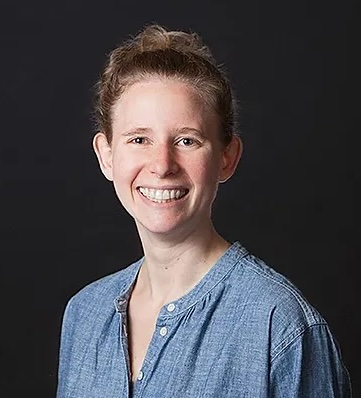
Dr Charlotte Elder, an obstetrician and gynaecologist from the Mercy Hospital for Women, the Royal Children’s Hospital, and the Austin, was given the honour of delivering the named lecture in 2024. Staying true to the 2024 Global Year theme, Dr Elder’s talk, entitled “Flipping the Script: Sex and Gender Disparities in Pain”, discussed several topics related to sex, gender, and pain that normally wouldn’t be discussed at an APS ASM. Dr Elder was open with the fact that writing parts of the lecture made her uncomfortable; a feeling she hoped those in the audience would share.
Dr Elder started her lecture with a series of polls for the audience. While there were only a handful of gynaecologists and pelvic floor physios in the audience, there were a greater number of researchers who concentrate on women and/or trans and gender diverse people. However, many more attendees had either had a period, breastfed, or been breastfed. The latter polls, according to Dr Elder, proved the themes presented throughout the lecture would be relevant to everyone on some level.
The (unnatural) truth about periods (and carrots)
Between 30 and 80% of adolescents have period pain, yet only a small proportion of these seek medical advice. Unfortunately, many who seek medical advice are told their pain is normal – that periods are meant to hurt – and that it will go away eventually.
Almost all cases of adolescent period pain are primary dysmenorrhea, where there is no specific pathology. But the absence of an underlying pathology doesn’t mean the pain isn’t real, according to Dr Elder.
“The inside of the uterus has skin in it. It’s about three millimetres thick and about the size of your index finger. When you have a period, you’ve got to shed about that much skin. Basically, the uterus strips off the lining and then squeezes it out, which is often as painful as it sounds,” Dr Elder explained.
The squeezing of the uterus is accompanied by the release of prostaglandins and other inflammatory cytokines, which can cause nausea, vomiting, diarrhoea, and dizziness – symptoms frequently accompanying periods.
Dr Elder then presented an interesting thought experiment about periods, using carrots as an analogy. Most people would think the normal colour of a carrot is orange, but not know why they thought this was the case.
“Carrots are orange because the Dutch liked orange carrots, so they put them everywhere and bred out all the other ones. But you can still get other beautifully coloured carrots,” said Dr Elder.
“If we think about what a normal number of periods is for someone to have in their entire life, you might say something like, ‘you get your first period when you’re 12, and you have a period every month. Maybe you have a couple of kids along the way, then you go through menopause when you’re 50’. I don’t do maths, but that’s a lot,” Dr Elder continued.
“[But] if you went back six or seven generations and talked to people about what their periods were like, they would have got their first period when they were 17, 18, 19 – the end of their teenage years, rather than the beginning – and then they would have had a bunch of kids and breastfed for ages.
“Most people in the breastfeeding stage don’t get periods, and they can often get pregnant again without getting their period back. And they didn’t live long enough to go through menopause in their fifties. So, these women would have had less periods in their entire life than what today’s average teenager will have while they’re at high school.”
Dr Elder described it as being in a weird situation, where women are having an abnormal number of periods compared to generations gone by – and that these periods are painful because of the prostaglandin release – but that people aren’t listening to them because there’s no underlying pathology.
What’s in a name?
However, some people do have something “real”: endometriosis.
“I think the word endometriosis is really loaded,” said Dr Elder.
“It means a lot of different things to different people. From a purely physiological or pathological perspective, endometriosis is endometrial tissue that sits outside the uterus. It can be microscopic or extensive, and it’s implicated in persistent pelvic pain and [in]fertility.
“[But] endometriosis as a concept has come to reclaim a space because it’s real. Interestingly enough, the guidelines for pelvic pain aren’t ever called pelvic pain guidelines. They’re called endometriosis guidelines because that’s where the funding is. Everything is hanging on this concept of endometriosis.”
Dr Elder reminded delegates there was rarely a direct correlation between endometriosis symptoms and pelvic pain.
“I once saw a patient who presented because her poo was skinny. It turned out the reason her poo was skinny is because her entire pelvis was completely shut down with scar tissue from endometriosis, and [consequently] her bowel was really skinny. She’d had no pain [and] had kids – everything was fine. She was in her mid-forties and skinny poo was her only presenting complaint,” Dr Elder said.
“Despite all of the guidelines for endometriosis, which are written by clinicians, saying we can do surgery in some people, we don’t need to do surgery in everyone. [But] we really don’t know the people that we should – or shouldn’t – do surgery in.”
Hormonal therapies can reduce pelvic pain, as suppressing periods works really well at getting rid of the prostaglandin-associated symptoms. However, there is pushback against hormonal therapies as some people claim they aren’t natural. Dr Elder’s response to these claims?
“Well, having periods every month from age 12 to age 50 probably isn’t natural [either], depending on your definition of natural.”
Dr Elder also has a counterpoint to claims that hormonal therapies were not designed to treat pain.
“Heaps of medications women use weren’t designed [for what they’re being used for]. If you look at obstetrics medications, they’re almost all used for off-label purposes because people don’t research on women, which makes it really hard to get this for on-label use.
“So yes, hormonal medications were designed for big ticket money items like contraception, [but just because] they weren’t designed for endometriosis [or pelvic pain] doesn’t mean that they don’t work.”
Walking the line of cosmetic surgery
The topic of genital cosmetic surgery makes Dr Elder uncomfortable, as it’s an area where she doesn’t always believe women when they talk about their pain.
While women can sometimes experience physical discomfort from their genitals whilst wearing underwear and will consequently seek surgery to address this discomfort, Dr Elder pointed to data from the UK, where a series of women who had surgery to alter the size of their labia later admitted they lied to their doctors about experiencing pain or discomfort so they could get the surgery for purely cosmetic reasons.
“Why is it okay for someone to get a boob job, but not get genital surgery? And why is it not okay to do female genital mutilation, but it is okay for people to have [the size of] their labia reduced because of their appearance?” pondered Dr Elder.
“It’s an area where I really do feel uncomfortable.”
Let’s not forget about breastfeeding
Dr Elder concluded her lecture by returning to the topic of breastfeeding, reminding delegates of the importance of thinking about the medications administered to breastfeeding women or chest feeding trans men. Dr Elder said the most common – although somewhat misguided – advice, especially after receiving an anaesthetic, is to “pump and dump” for the safety of the baby.
“That is never benign advice. You might have a really tenuous breastfeeding relationship. [Or] you might have a baby who’s a bottle refuser. Telling someone to just discard milk without checking whether the medication they’ve had is safe can be a potentially damaging thing,” Dr Elder said, before highlighting useful resources from the Royal Women’s Hospital and the Infant Risk Center on this topic.
“Pretty much everything you give in a standard anaesthetic is okay with breastfeeding. If the patient can hold the baby, they can probably breastfeed. [But] so many people are not given that advice.”
Lincoln Tracy is a postdoctoral research fellow at Monash University and writer from Melbourne, Australia. He is a member of the Australian Pain Society and enthusiastic conference attendee. You can follow him on X (@lincolntracy) or check out some of his other writing on his website.





 Australian Pain Society