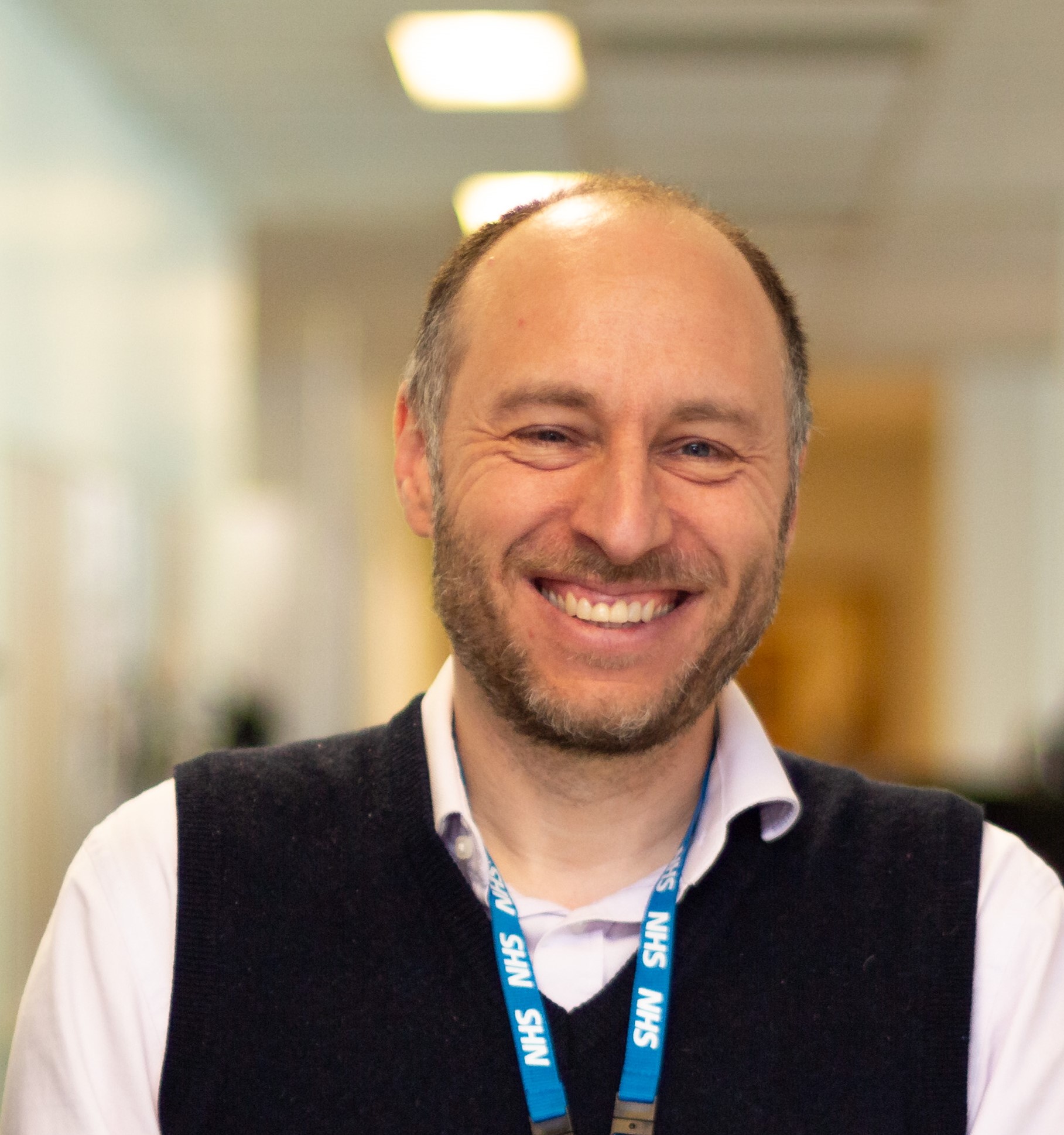
David Bennett, MD PhD is a Professor of neurology and neurobiology at the University of Oxford, where he is also the head of the Division of Clinical Neurology. In addition, Bennett is a consultant neurologist at Oxford University Hospitals and is a senior research fellow of Green Templeton College. His research aims to understand how neural injury and neuropathic pain develops, with the ultimate goal of improving how this debilitating condition is managed in clinical settings.
Bennett is an international keynote speaker at the upcoming 45th Annual Scientific Meeting (ASM) of the Australian Pain Society, which will be held in Melbourne from April 13-16, 2025. In the lead-up to the ASM, Bennett spoke with Lincoln Tracy, a researcher and writer from Melbourne, Australia, discussing his experiences in working with giants of the pain field during his early career, how and why he aligns his research and clinical interests, and the extremely practical advice he would give to his younger self. This interview has been edited for clarity and length.
What was your path to becoming a neurologist and a pain researcher?
Interestingly, I was a pain researcher before I became a neurologist – but there was a lot of chance and luck involved in the journey. While I was in medical school, I integrated a neuroscience degree into my studies and was lucky enough to do a project in the laboratory of Stephen McMahon and Patrick Wall. Steve had been a postdoc with Pat while he was working at University College London, and then moved to St Thomas’s to set up his own lab. A few years later Pat retired from UCL and came to St Thomas’s as an Emeritus Professor.
There was one summer where Steve was meant to go to San Francisco to work on a collaboration with a company called Genentech, but his wife fell pregnant, and he decided he couldn’t go. Steve asked if I wanted to go in his place, so during my summer vacation I spend two months working at Genentech and really loved it – the facilities they had were really eye opening. Molecular biology was still in a relatively nascent state at the time, but they were cloning growth factors and receptors as they worked out signalling pathways and tried to use what they learned to make receptor blockers and use growth factors therapeutically.
When I got back from the United States, the medical school had decided that they wanted to set up an MD-PhD scheme where people could integrate a PhD into their medical training, and they asked me if I wanted to be the first student in that program. I grabbed the opportunity with open arms. I spent three years doing my PhD, which focused on the sensory nervous system and involved researching the role of growth factors in its development, how growth factors modulate the function of the sensory nervous system and pain, as well as the role of nerve growth factor in inflammation.
That experience set me up for the rest of my career, because I really enjoyed neuroscience and working in the pain field – from that moment I always knew I wanted to be a clinical academic. Luckily, I also really enjoyed neurology and felt that there would be a place for someone that was trained as a neurologist but was also interested in the peripheral/sensory nervous systems and pain. So, I aligned the remainder of my clinical training on that track and did my neurology training in hospitals all over London with the aim of coming back and doing academic research in neurology.
What was it like working with Patrick Wall and Stephen McMahon, who both made incredible contributions to the pain field, in the early stages of your career?
I was tremendously lucky to have them both in the same environment – they were really inspirational in every way and made doing science a lot of fun. They were both very social and would love to chat about new ways of approaching things, so there was a fair amount of time spent going to the bar after work.
As a medical student you spend a whole lot of time ingesting very large amounts of information without always getting to think about it, so I really appreciated more of the “discovery” time I spent with Steve and Pat where we would debate new ideas and think about how to test them. They were great mentors, tremendous scientists, and just really fun to be around.
As someone who is both a researcher and a clinician, how important is it that your interests in these two areas complement each other?
Everyone’s circumstances are different, but all things being equal, I would tell clinical academics that it’s very helpful to align your clinical work and your research work because you are that translational bridge between the two worlds. And to be honest, I made an active decision to do that. It would be quite hard to do my job and not have the two complement each other.
The way I see it, I’m not going to be the world’s best pre-clinical scientist because I’m spending 30-40% of my time doing clinical work, but I’m also not going to be the world’s best general neurologist because I’m spending 50-60% time doing research. But the sweet spot in the middle is that if I’m in a specialist area of neurology that complements my research, then I have something that’s relatively unique. The research will feed off the cohort of patients that I recruit and hopefully the outcomes from that research can feed back into patient care.
What projects are you and your team working on most intensely at the moment?
One area where we’ve been expanding for a while has been recruiting clinical cohorts to try and understand the many different factors that can lead to neuropathic pain and how they interact at the individual level, whether it’s genetics, psychology, or particular patterns of nerve injury. It’s very difficult to map mechanisms to patients, but we’re getting better at developing techniques to do so, such as electrophysiology or functional brain imaging.
We’re also doing quite a lot of work with the UK Biobank, which is a very large cohort study of around half a million people. We’ve got some good pain phenotyping questions in there now, and we can relate that data to lots of different clinical factors and blood or genetic markers – which is proving to be quite fruitful. For example, we’ve got a project where we discovered a genetic association with pain intensity in using Biobank data. We thought the gene related to a transporter, but we had no idea what it was transporting. So, we looked at its biochemistry and solved the structure of the protein and found that it transports polyamines, which allowed us to make cell lines and a mouse model that no longer express the gene to show that it did in fact have a role in pain.
Then we also do some clinical trial work, where we take these discoveries and then try to exploit them with therapeutics. One example is that we are working with Professor Mary Reilly, who was leading a trial in the National Hospital for Neurology and Neurosurgery at Queen Square looking at a genetic disorder called hereditary sensory neuropathy type 1. HSN1 arises from a genetic mutation that produces toxic metabolites for complex reasons, but we found that you can reduce the level of these metabolites by treating with the amino acid serine. Now we’re doing a trial treating HSN1 with serine in patients.
You have been involved in a number of different research consortia over the course of your career, what sort of benefits come from being involved in these large-scale projects?
I think it comes back to an issue of scale. There are some questions that you can only answer on a large scale, particularly if you are trying to build up large clinical cohorts of highly phenotyped patients in a harmonised manner.
For example, when I led the DOLORisk consortium, we recruited thousands of patients. Some of them were in longitudinal cohorts, and some of them we applied lots of different physiological and genetics techniques to. Projects of this size allow you to take things forward as a group – coming to a consensus, and developing standards and platforms that are going to be a future research resource for decades to come. That’s not to say they don’t come without their challenges, but I have really enjoyed working with these collaborative groups and look forward to being involved in more as time goes on.
What are some of the major questions in your area of research that you would like to see answered over the next five to 10 years?
One big thing that I would love to see answered, but that I can’t promise will be answered, is the issue of heterogeneity between patients – why some people with diabetic neuropathy develop pain and others don’t, or what are the distinct mechanisms underlying different sub-types of sensory dysfunction in those with painful neuropathy? We need better techniques to measure the pathogenic mechanisms in patients and hopefully map it in a manner that would allow us to stratify patients into different groups. I think that unless you know what you’re dealing with, you won’t be able to target existing or newly developed treatments to better deliver improvements in pain care.
There’s also a lot that needs to be done in terms of central circuits – whether it’s the spinal cord or the supraspinal circuits – and I suspect we will unravel a lot more of that in the next 10 years. Of course, the majority of that work will most likely be done in rodents, so then there’ll be the issue of how you can bridge that to humans but functional brain imaging will provide opportunities.
What keeps you motivated to keep doing research?
That’s an interesting question. My life is quite busy, but I like the different aspects and domains of it because they all motivate me in different ways. For example, I enjoy the day-to-day process of doing science and the scientific process. I feel I tuned into the discovery aspect of science from a young age while I was working with Steve McMahon and Pat Wall, where I learned to like the idea of moving into new territory, having different ideas, and making new discoveries. There are always new paradigms to adopt, new techniques to integrate into your work, and new challenges that come with novelty and change.
Being a clinician has its own set of challenges, not the least of which is finding the time to do clinics and see patients while simultaneously running a lab. But in a way, this is motivating, because while we can talk in the lab about the various mechanisms underlying pain-related conditions, seeing patients and the challenges of how they manage their clinical condition and their pain keeps me centred.
I also enjoy working with young students and scientists in my group. As you get older, it’s nice to see new generations come through, and to see people that have been students in my lab build up their own lab and become independent leaders in their own right.
Is there one paper or project from your career that is special to you, or that you are particularly proud of?
This is like asking me to choose between my two daughters, which no father is ever going to do [laughing]. I don’t think there’s a paper I would say I’m prouder of than others – they all have their own histories and stories attached to them. But there are definitely a few I’m quite nostalgic about. One came very early in my PhD with Steve McMahon and David Shelton, which looked at blocking NGF.
And then more recently, the last paper I published with Steve, who died in 2021 but was published in Neuron in 2022. We were working on an interesting project where we’d taken a genetic finding and then done the spinal cord calcium imaging in his lab. The core of the paper had been written before he died, but it wasn’t published until after his death. He was a very close friend, so I get quite nostalgic about those two papers.
What are you looking forward to most about coming to Australia for the ASM?
I’m looking forward to meeting the pain community in Australia. I have been to Sydney and done a bit of travelling up the coast, but I’ve never been to Melbourne before. I’m really interested to see the conference and get a feel for Australian pain science. A bit of sun wouldn’t go amiss either!
Finally, what’s one piece of advice you would give to your younger self?
Learn to touch type [laughs]. I was part of the generation where all my schoolwork and the first part of my clinical career was done with a pen and paper. I type very slowly, and my life would be so much easier if I could touch type – it would make me so much more efficient with my writing.
Lincoln Tracy is a senior research fellow at Monash University and freelance writer from Melbourne, Australia. He is a member of the Australian Pain Society and enthusiastic conference attendee. You can follow him on X (@lincolntracy) or check out some of his other writing and interviews on his website.





 Australian Pain Society