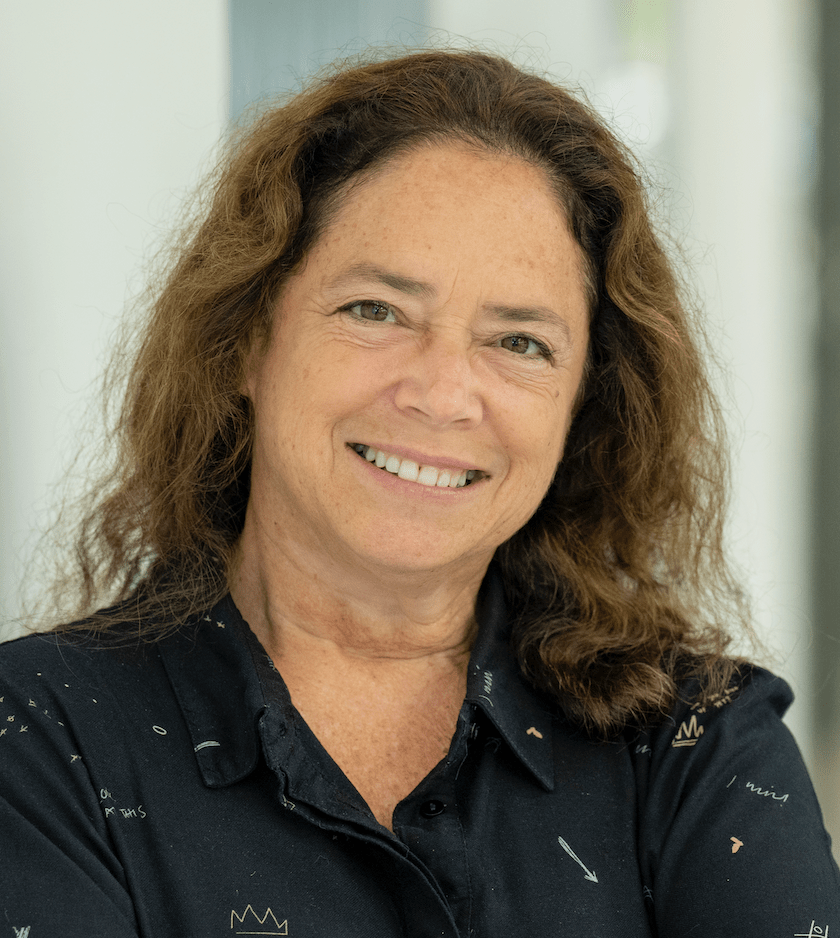
Professor Tamar Pincus, PhD ( Health Psychology) Dean of the Faculty of the Environment and Life Sciences at the University of Southampton (UK). Her research involves exploring the psychological mechanisms of pain in experimental settings, observational studies to measure changes in risk of time, and conducting qualitative interviews to explore the thoughts and beliefs of people living with pain, along with those who are part of their lives.
Prof Pincus is an international keynote speaker at the upcoming 45th Annual Scientific Meeting (ASM) of the Australian Pain Society, which will be held in Melbourne from April 13-16, 2025. In the lead-up to the ASM, Prof Pincus spoke with Dr Lincoln Tracy, a researcher and writer from Melbourne, Australia, discussing how her career took her from music to psychology, the biggest project she’s ever worked on, and why more pain clinicians need to think like magpies. This interview has been edited for clarity and length.
What was your path to pursuing a PhD in psychology?
I have been one of these people who have hopped from one career to another. My first degree was actually in music, and then I developed an interest in looking at the psychology of music and how music contributed to wellbeing. I ended up doing a masters in research methods and statistics at University College London. As part of the course, we had to do a dissertation, and I happened to knock on the door of Shirley Pearce, who was researching pain. The next thing I know I had a studentship to do a PhD.
Shirley was interested in cognitive biases and pain – the idea that people who live with pain, particularly chronic pain, don’t process the information from their environment in the same way that you do if you don’t have pain. I started with an experimental study exploring attention in pain, but I was also extremely lucky because Shirley linked me to two of the giants of the pain field at the time: Pat Wall and Stephen Morley.
What was it like working with such established researchers at the early stages of your career?
Pat had a way of making you feel relaxed, because he was really relaxed. He would chat about literature, theatre, poetry, or art… he could talk about anything. It never really clicked that I was talking to such a giant in the field, because I would go in and talk about what I was doing. He’d go, “oh, that’s really interesting, [and] here’s a mouse’s brain”. It was different with Stephen, though, because I knew that he was such a leading voice in my area of research. Stephen was one of my PhD examiners, and I remember walking into the room and finding myself shaking at how nervous I was. But he loved my work, so when I walked out it felt like I was walking on air.
What kinds of projects are you and your collaborators focusing on at the moment?
One area is all about how we prepare for clinical trials. If you look at previous trials on pain, the vast majority of them are either unsuccessful or only have a tiny effect that doesn’t last. You can’t look at that and not think about what a terrible waste of money has been. But to me, the truth is that we don’t prepare for trials sufficiently. We don’t really build our interventions carefully through models and theories and then test them sufficiently in smaller pilots. We try to test them as fast and as cheaply as we can, and we end up with a tiny effect because we’ve watered down the whole principle that we’re trying to operate on.
Another area goes back to the work I started with Stephen Morley, which is looking at the concept of validation, but we’re doing it in a modern research laboratory. I’m really interested in thinking about how you define and measure validation. Does it happen in a moment, or is it iterative? It’s clearly important between a clinician and a patient, but it also exists in your day-to-day life with the people around you, be they teachers or your partner. I’m interested in the effect of validation – the cognitive mechanism that changes when you as a patient, who has been trying to tell your story for a long time, are finally heard and validated.
And we have a theory about what might happen, and how what happens impacts your ability to understand the messages you’re being given by a clinician and then change your behaviour to hopefully see a difference in how you live with your pain. We’re really zooming in to see what biophysiological changes occur during a simulated consultation – which includes validation – and then we can look at the video and get patients to tell us the exact moment when they first felt validated. We can then look at whether there are changes in their biophysiological signals or facial expressions.
Is there a particular project or publication from your career that you’re particularly proud of?
Am I allowed to have three [laughs]? One of the things I published with Stephen after we started working together was a big review in Psychological Bulletin. We were very interested in the enmeshment between self-identity and pain leading to distress. It was a cognitive model that I’m still working on, so that’s a particularly important one.
The second one comes from more recently in my career, when I started to really understand the patient voice. As researchers, we distance ourselves from the real world, especially if we do experimental work. I eventually started to listen more to the patient voice, and a few years ago we wrote a paper where we turned things on their head. Instead of doing what researchers usually do, which is presenting all the evidence first and then having a patient come in at the end and say that they agree with it, we worked with Joletta Belton and did the complete opposite. Joletta told her story of living with pain, but every now and then we would stop and provide the relevant evidence underneath what she was saying. I’m really grateful to the editor who got their head around publishing something so different – I’m hoping that paper will change the way other people will approach their writing.
And then the final one is from 2023, and was the biggest project I’ve ever done for a single paper – the meta-analysis and network meta-analysis for antidepressant use in chronic pain, which was published as a Cochrane review. I think there was a level of naivety on my part when we took that project on, but our findings were very important and have already been included in two different sets of guidelines. I think this piece of work really set research priorities for other pharmacological interventions, because over the years I feel we dove into using a lot of pharmacological interventions which are not necessarily supported by research – which means we might have caused more harm than good.
Was there a particular event or moment that made you recognise the importance of the patient voice?
I’ve never really reflected on that. But I think it was a combination of things, with one of the primary ones being lived experience. I had a number of very serious episodes of pain, which limited my life considerably. This experience changed the way I viewed interactions between clinicians and patients, as when I returned to training clinicians after going through these episodes, I started to see a number of behaviours that I would have found quite difficult to deal with if I was the patient. Nowadays, the majority of what I teach practitioners is to communicate better, to validate and reassure while understanding depression and anxiety, which all comes from my research work.
In your mind, what are some of the big questions in the pain field that you would like to see answered over the next five to 10 years?
I think at least some of the big questions have to be around pharma. We need to think about what we are giving people, the effects it has on them, and the harms that these treatments can cause. While doing the Cochrane review it was shocking to find out that the research base for the use of a lot of antidepressants – especially amitriptyline – is so weak, and yet millions of people are prescribed amitriptyline as if it’s a routine drug for pain. So, I think we need to start looking at pharmacological interventions more seriously, especially in terms of potential harms, as most trials that we reviewed didn’t report long-term adverse events at all.
Given the historical reliance of viewing pain from a biomedical perspective, do you have any thoughts on how the use of pharmacological interventions has affected the way people view their pain being validated?
The use of pharmacological interventions drives the biomedical model of pain, and the biomedical model drives the use of pharmacological interventions. And without a doubt there is an overuse of surgery and a tendency to go with a treatment that you can just prescribe. But I do need to clarify something. For every treatment that we look at and which our trials find no evidence of an effect – even if it’s something like paracetamol or ibuprofen – there is always a subgroup of people who are true responders. But because we test the effects at the group level, we end up throwing away the responses from these people when we give up on a particular treatment.
So, we need to find a way of identifying these people and matching them to an intervention. And you can say the same thing about other interventions, whether it’s surgery, physiotherapy, psychology… sometimes pain management works, sometimes it doesn’t. People get really married to a particular way of doing things, but I think it’s having a sense of flexibility that allows you to be a great therapist. I describe myself as being a bit of a magpie – I look at all the amazing ideas people have and steal little bits and pieces here and there, and now have a little treasure trove of different approaches.
What motivates you to keep doing what you do?
I get enormous satisfaction from the moment where you can see on a practitioner’s face that they finally understand what you’ve been trying to teach them. It’s quite moving to hear them say, “this is dear to me, I’m going to take it home and I’m going to use it in my life – not just in practice – because I can now see there’s no difference between patients and people, and I’m a person”. It’s incredibly rewarding to see that kind of self-awareness develop in people.
Then on the research side of things, I’m always excited by seeing people who I have mentored during their PhD, or the early stages of their career, come through as the next generation of researchers, to see them spread their wings and do things that I wouldn’t have even thought of because they are so confident in what they’re doing.
What’s a piece of advice that you think all students and trainees should remember?
I remind them to not take things personally when your paper or grant application is rejected. It never stops feeling like you’ve been mown down by a bus, but most of the time it’s not personal. You need to turn yourself around and think, “how do I make this better?”. Feedback is a gift – a thorny one – but it’s still a gift. Someone reviewed it in order to make the science better, to help you improve. I was very touchy about getting rejected early in my career, even when papers were accepted but the reviewers wanted minor changes. So, one of the pieces of advice is to just wait 24 hours before you respond.
What are you looking forward to the most about coming to Australia for the ASM?
The people! I mean, you’ve got some of the best researchers in the world down there. People like Peter O’Sullivan, Lorimer Moseley, Tasha Stanton – and I’m actually going to get to hang out with these people, talk about research, and build collaborations? I can’t wait. I’ve wanted to come out to your conference for the last 10 years. I’m very excited to finally get the opportunity to do so.
Dr Lincoln Tracy is a senior research fellow at Monash University and freelance writer from Melbourne, Australia. He is a member of the Australian Pain Society and enthusiastic conference attendee. You can follow him on X (@lincolntracy) or check out some of his other writing and interviews on his website.





 Australian Pain Society