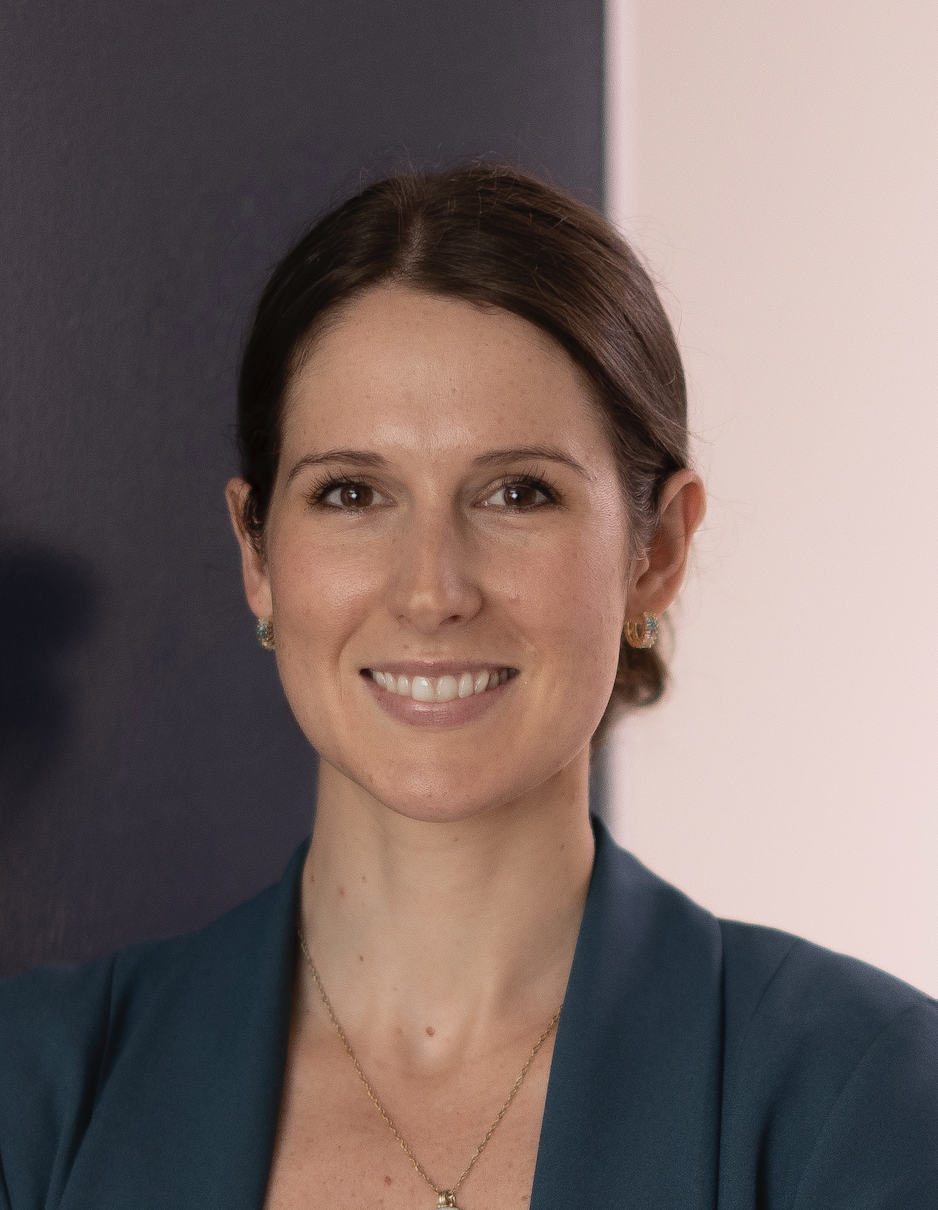
Dr Caitlin Jones, PhD, is an early career researcher at the Institute of Musculoskeletal Health, a collaborative research hub established by The University of Sydney and the Sydney Local Health District. Her research explores the benefits and harms of high-risk treatments for painful musculoskeletal conditions. Dr Jones was recently announced as the Australian Pain Society’s Rising Star for 2025, an award showcasing up-and-coming researchers in the Australian pain community.
As the Rising Star Award winner, Dr Jones will deliver a plenary lecture focusing on the role of opioids for musculoskeletal pain at the upcoming 45th Annual Scientific Meeting (ASM) of the Australian Pain Society, which will be held in Melbourne from April 13-16, 2025. In the lead-up to the ASM, Dr Jones spoke with Dr Lincoln Tracy, a researcher and journalist from Melbourne, Australia, about her journey to becoming a pain researcher, what winning the Rising Star Award means to her, and more. This interview has been edited for clarity and length.
What was your path to pain research?
Before I started my research journey, I couldn’t decide between studying physiotherapy and psychology, and I sort of stumbled upon this profession called occupational therapy. OT is really a combination of both of those things – it’s treating people from a physical, psychological, and cognitive perspective. It felt like a great way not to have to choose one thing, but to get to explore two areas I found interesting.
During my time as an occupational therapist, I worked in both acute post-surgical care and rehabilitation with a lot of people who had pain. It was always a bit frustrating to me that we didn’t seem to have great ways of managing pain – even acute pain – in ways that allowed them to be functional and enjoy their lives. And on top of that, I developed low back pain during my early twenties, which was quite debilitating at times.
That was the final nudge I needed to finally act on my desire to get involved in pain research. I started looking for a supervisor and a project so that I could potentially do a PhD. Eventually I found Professor Christine Lin at the Institute for Musculoskeletal Health, and it was just incredibly good fortune that the OPAL trial was looking for a PhD student at that time. I jumped at the chance without really appreciating what an incredibly good experience this was going to be. Now when I look back at things, I consider that jump from clinical work to research to be one of the best decisions I ever made.
How do your own experiences of living with pain help inform your research work?
I feel it gives me a genuine empathy for how debilitating pain conditions can be. I’m quite lucky that I experience episodes of acute pain; it’s not something that’s with my all day, every day for years on end. But I feel I have a degree of understanding of what it’s like for people to live with pain, and what it’s like spending time and money on finding and trying treatments from all different healthcare professionals but then not getting any real benefit from those treatments. My experiences have opened my eyes to how much we don’t know – and how few silver bullet treatments we have – for something as fickle as pain.
You mentioned your involvement in the OPAL trial, which looked at the use of short-term opioid analgesics for low back pain and neck pain. This trial generated a lot of discussion – not all of it positive – among the pain community when the findings were published. What was it like dealing with such a vocal response to your research?
That’s a great question. I was the PhD student on the OPAL trial, so I was in a very fortunate position where I had these excellent and highly experienced researchers who were my mentors and supervisors to guide me through that period where I felt like a fish out of water.
We were really pleased that the trial was getting so much attention, because that’s what you hope for after you complete a trial. But given that the findings were a bit surprising and even controversial in some circles, we were grateful for the good faith discussion and feedback – even the criticism – that was given to us from the pain community. No trial is perfect, and feedback like that is helpful for designing the next trial.
But there was definitely a minority of responses that were nasty, and more personal abuse and harassment rather than feedback. Even though most of the discussion was done in good faith, those not-so-kind comments felt very loud. But we all supported each other through that, and I try to keep the perspective that it really was just a small part of a much larger, more positive and constructive dialogue about our work.
What does winning the Australian Pain Society Rising Star Award mean to you?
I’ve been involved with the APS since I was a first year PhD student, because I was rightly advised that membership would be a fantastic way to meet people, become part of the national community, and learn about areas of pain research that are different from the ones I work in. I can remember the last four or five Rising Star winners, and I was incredibly impressed by all of them, so I’m shocked and flattered to be following in their footsteps.
Winning an award like this does wonders for my confidence, and feeling like I’m not only part of, but that I’m making meaningful contributions to, this wonderful pain management community. It will also help my career, because having the support of the APS will go a long way to helping me stand out from the crowd when I’m applying for highly competitive grant opportunities where the success rates are so low.
Without giving all of the details away, what do you hope attendees of the ASM will take away from your plenary presentation in April?
I hope that people leave my talk with an open mind about the idea of evidence-based medicine, and where we may be going wrong in the pain field. I think most people are already on board with the notion that we need to demand a high level of evidence before we implement new interventions, but they are often is less questioning of the evidence behind interventions that have been used for a really long time.
It’s hard to change habits, and there are some long-held assumptions and vested interests that influence decision-making around certain pain management interventions. Using opioids for musculoskeletal conditions is just one example of a practice that’s been widely used for a long time – but the decision to use them is based more on history and assumptions rather than evidence. And there are plenty of other interventions where the evidence base underpinning their use in practice is pretty shaky or doesn’t exist at all. So, I hope that after my talk people will think about where the gaps in the evidence base of their respective fields are, even for those things that have just always been done.
Is there a particular study or manuscript that’s particularly important to you, or that you’re really proud of how it turned out?
Well, the OPAL trial is definitely the most impactful thing I’ve ever been a part of, so I’m incredibly proud and grateful to have been involved with that. But I’m even more proud of a pilot trial that we recently completed where we looked at reducing the amounts of opioids prescribed when a patient is discharged after having hip or knee replacement surgery. We found that the idea of the trial is feasible and acceptable to clinicians and their patients, which has lit a fire under us to proceed with a full-scale trial.
This study was designed and conducted with a whole team of people, but I was able to take on more of a leadership role on this project now that I’m a few years out of my PhD. Getting to take on more of an active role made me realise how much I have developed – in terms of skills, abilities, and confidence – since I was a PhD student when I was brand new to everything. It makes me really grateful for all the people who have taught me over the last five years.
What keeps you motivated to do research?
Getting to work on the OPAL trial as a PhD student was such a great start because it showed me that anyone can be involved with impactful research at any stage. That feeling that I’ll be able to keep having an impact, even if it’s incremental impact – keeps me going. I also find it really rewarding to get to be a part of the scientific process of improving healthcare. And I just love the day-to-day work involved with research – the reading, the writing, the thinking, the talking, and developing new ideas. I feel that it suits my personality even more than what clinical work did.
What pieces of advice do you have for students and other early career researchers or trainees?
One of the pieces of advice is to think carefully about who you pick as your supervisor – even more carefully than what the specific project you’ll be working on is – and let that guide your decision-making. You’ll be working very closely together, so you really must have that mutual respect and enjoy working with each other.
Another piece of advice I give to other people all the time is to remember that it’s completely normal to get rejected and get critical feedback, or to have to keep working on drafts of the same piece of work and being frequently disappointed with the results. These things aren’t a sign that you’re doing it wrong, or that you are not as good as your peers. Every single person you see win a grant or an award, or get published in a good journal, has probably been rejected multiple times. But you only hear about the good things when they finally happen – you don’t always hear about the failed attempts along the way. Research really is a game of persistence, and you’ve got to learn to grow and adapt, to bring in fresh perspectives, or even change courses. But you can’t give up, because a bumpy road is the normal road.
The third thing I often tell other students and trainees is that you need to learn to separate your sense of value and self-worth from your successes in research. These days the system is just too random and there are too few successes that come along to let that dictate your self-esteem. There are healthier ways to feed your self-esteem – like thinking about how much work you put into things, how strong your collaborative relationships are, and who you are outside of work.
If you had an unlimited bucket of money to fund your dream research project, what question would you try and answer?
I would like to implement a massive registry where every intervention for pain that gets delivered in the Australian healthcare system is recorded, and there are outcomes and follow-up measures integrated into normal clinical practice, so we are constantly gathering information on how well things worked and what adverse events or harms came afterwards. Having a constant, massive observational study would allow us to learn so much about the interventions we deliver in real time and to adapt our practices as needed. This wouldn’t eliminate the need for randomised trials, but now there is just so much information that we’re not capturing. It feels like such a waste to have all this healthcare being delivered and for us not to learn anything from it.
And we’re already doing this on a smaller scale. For example, the Australian Orthopaedic Association National Joint Replacement Registry collects outcomes from something like 90% of people who have a hip or knee replacement in the country. So, it’s possible, but I’d like to upscale that to every healthcare intervention we deliver. Let’s take it further.
Finally, what’s something that people might not know about you? Do you have any interesting hobbies or secret talents?
I think anyone that knows me probably knows this already, because I think I talk about it too much, but I have an interest in sustainable and healthy building practices – so much so that my husband and I are currently building our own home using these practices. It’s better for the environment because a lot of the materials used in this way of building are carbon negative, and the building techniques prevent the house from growing mould and leaking air, which makes it much easier for the house to passively maintain its temperature.
Matt, my husband, is a tradie and has done 99% of the work, and I serve as a struggling, non-qualified and unofficial apprentice helping with the other one percent. We’re about 80 or 90% done, and we can’t wait to show people our healthy, sustainable home when it’s finished. There’s lots of great information on the Australian Passivhaus Association website, and I encourage anyone who is interested to check that out.
Dr Lincoln Tracy is a senior research fellow at Monash University and freelance writer from Melbourne, Australia. He is a member of the Australian Pain Society and enthusiastic conference attendee. You can follow him on X (@lincolntracy) or check out some of his other writing on his website.





 Australian Pain Society