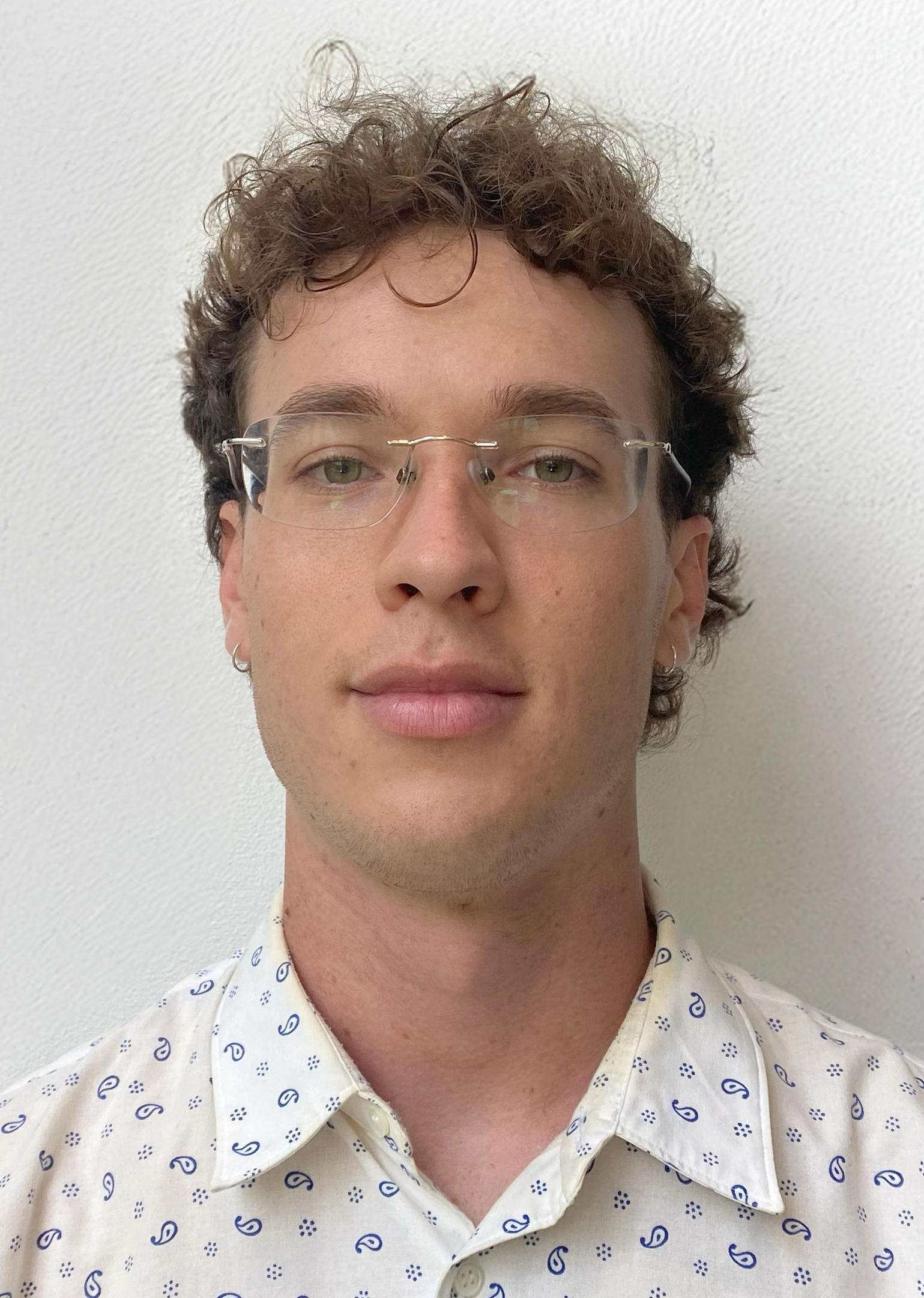
Fred Collin
Fred Collin is a PhD student at the Laboratory of Neuroimmunology and Behaviour at the University of Sydney. He is investigating the effects of photobiomodulation in preclinical models of neuropathic pain as well as investigating the effects of cannabidiol on the immune system in patients with painful spinal cord injury. He has a curiosity for all things neuroscience and is eager to expand his knowledge on pain through a mix of human and animal research.
An exciting first step for a PhD student’s journey into research
The 2025 Australian Pain Society (APS) Annual Scientific Meeting (ASM) was the first scientific conference I have ever attended. I flew from Sydney to attend the conference, which was thankfully possibly with the APS Travel Grant. It was great to meet so many like-minded researchers at different stages of their careers. I was nervous about what to expect, but by the end, I had a deeper understanding of pain, how to improve my presentation skills, and an excitement to get back to the lab.
At the conference, I realised how little I know about pain. As I sat in lectures and sessions aimed at clinicians, I got to see the translation of basic research to its clinical applications. I saw how pain is treated much more holistically than I assumed. The discussion between experts and a patient with chronic pain in the ‘Psychedelics in pain panel’ helped me realise the real life situations where my research could benefit. It left me with a lot of reflection as to how I have previously viewed chronic pain as being so black or white, when in reality, it exists on a spectrum. Hearing about the lived experiences of someone trying multiple treatments that turn out to be ineffective was very salient and has stuck with me. During Professor Tamar Pincus’ first plenary, she explained a metaphor that compared chronic pain to plasticine and how pain is entwined with one’s life. The metaphor was another great example of how multifaceted pain can be. Reading hundreds of papers can only help so much, but attending conferences is such a necessary part of research. Since the conference, I have looked to various media and articles to further understand pain. Consequently, the conference has improved my iterative process of continually learning and relearning.
I was lucky enough to present at the conference, which was a great learning experience. At the Basic Pain Research (BPR) pre-conference workshop, I got to present in the 3-minute-thesis competition. I was confined by one static slide to convey my research to the room. I discussed my research into profiling immune cells in patients with painful or nonpainful spinal cord injuries. What we found was that following a spinal cord injury, there are changes to immune cell populations and their expression of inflammatory and proliferative markers. We further found patients with pain showed similar expression patterns to patients with more severe injuries. Although these insights were difficult to limit to three minutes, I had a lot of fun trying. I also got to present at the free paper session. Here, I discussed my research into using photobiomodulation therapy (PBM) to treat a rodent model of peripheral nerve injury. We investigated pain behaviours and differences in immune cell activation throughout the body. We found PBM to provide analgesia to thermal and to have some anti-inflammatory effects on macrophages at the injured nerve, and on monocytes and T cells in the peripheral blood. Presenting this in front of a room of experts was nerve-racking, but I got some very valuable feedback, that I will take on board.
At the ‘Meet the Minds’ session, I got to have informal chats with Professor Andrew Rice, Doctor Saurab Sharma, and Professor Tamar Pinkus. We discussed their research journeys, their approach to science, and how to work effectively in a team. As I was surrounded by other PhD students, we really got to answer some nitty-gritty questions that everyone had on their minds. These chats left a lasting impact on me, and I will definitely sign up for it again next year.
Overall, the conference taught me some very valuable information and improved upon a variety of my skills. I also had an amazing time at all the social events. I’m very thankful for the travel grant for making this experience possible and I can’t wait for the 2026 APS conference in Adelaide.
Declaration:
Fred Collin and his supervisor Associate Professor Paul Austin are supported by a philanthropic donation from the Neil and Norma Hill Foundation.





 Australian Pain Society